










Security teams have access to more vulnerability data than ever before. Every scan, assessment, and monitoring tool adds another layer of insight into an organization’s attack surface. That visibility is valuable, but it also creates a familiar challenge. When hundreds or even thousands of vulnerabilities are identified, deciding where to begin is rarely straightforward.
Every security program operates with finite resources. Time, staffing, and budgets all influence how quickly vulnerabilities can be addressed. The organizations that make the greatest progress are not necessarily those that find the most vulnerabilities. They are the ones that consistently prioritize the right ones.
That is why risk prioritization software has become such an important capability in modern vulnerability management.
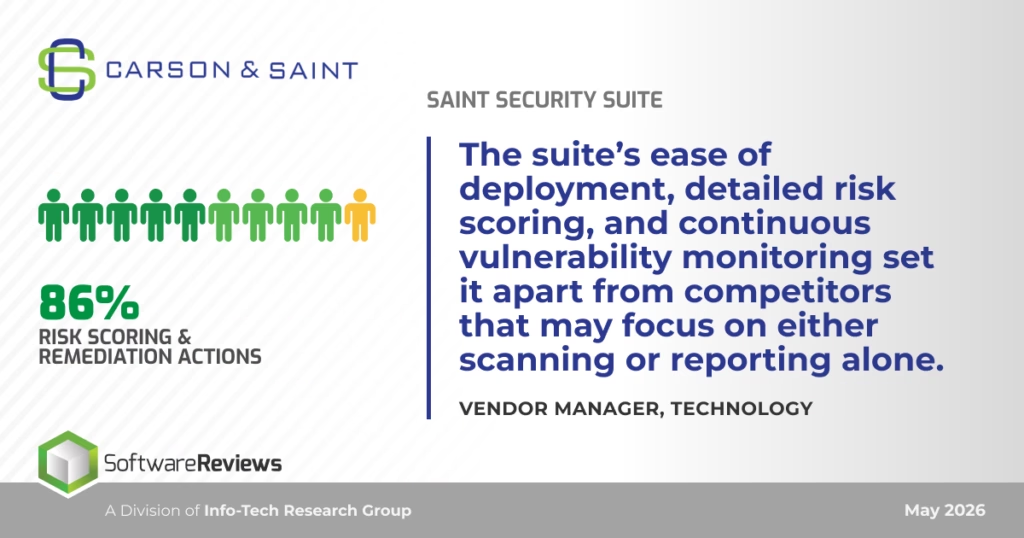
The latest SoftwareReviews customer feedback reinforces this point. Among the highest-rated capabilities was Risk Scoring & Remediation Actions, highlighting the importance of helping security teams understand where their efforts will have the greatest impact.
Context Turns Data Into Action
A vulnerability by itself only tells part of the story.
Severity scores provide useful guidance, but they cannot account for every factor that influences business risk. An internet-facing application that supports critical operations deserves a different response than an internal system with limited exposure. Likewise, vulnerabilities with active exploits often require greater urgency than issues that present little practical risk.
This is where context becomes essential.
Risk scoring helps security teams evaluate vulnerabilities alongside asset criticality, exploitability, and business impact. Instead of working through a list from top to bottom, teams can make informed decisions based on the organization’s priorities and risk tolerance.
That approach leads to more effective remediation planning and better use of limited security resources.
Better Priorities Lead to Better Outcomes
Every remediation decision carries an opportunity cost. Focusing on lower-risk issues can delay work on vulnerabilities that present a far greater threat to the organization.
Effective prioritization creates alignment across security, IT, and business leadership. Security teams gain confidence that they are addressing meaningful risk. IT teams receive remediation guidance that reflects operational priorities. Executives gain clearer insight into how security efforts are reducing business risk instead of simply reducing vulnerability counts.
Those outcomes are difficult to achieve when every finding is treated with the same level of urgency.
Solutions like SAINT Risk Navigator help organizations place vulnerability data into business context so remediation efforts can focus on the issues that matter most.
Risk Prioritization Supports a Stronger Security Program
Risk prioritization is not a replacement for vulnerability management. It strengthens it.
As attack surfaces continue to grow, organizations will continue collecting more security data than they can reasonably address all at once. A mature cybersecurity program recognizes that successful remediation depends on understanding both the technical severity of a vulnerability and its potential impact on the business.
That broader perspective also supports effective Cyber Risk Management by helping organizations direct resources where they will reduce the greatest amount of risk.
Turning Insight Into Action
Finding vulnerabilities has never been the end goal. Every scan, assessment, and report is meant to support a decision about what should happen next.
The SoftwareReviews recognition for Risk Scoring & Remediation Actions reflects what many security teams already know from experience. The value of a vulnerability management platform is measured by the quality of the decisions it helps organizations make.
When security teams can confidently identify which vulnerabilities deserve immediate attention, remediation becomes more focused, resources are used more effectively, and cybersecurity programs are better positioned to reduce risk over the long term.

0 Comments