










Penetration testing gives organizations an opportunity to see their defenses from an attacker’s perspective. But the value of a penetration test depends on more than the number of vulnerabilities it identifies.
A test might uncover dozens of weaknesses without clearly explaining which ones pose the greatest threat to business operations. Another might identify a smaller number of exploitable vulnerabilities and provide the context security teams need to address them effectively.
For IT directors, CISOs, and other security decision-makers, choosing the right penetration testing services means understanding what the engagement will deliver.
Here are seven qualities to look for when evaluating a penetration testing provider.
1. Testing That Reflects Your Business Risk
An effective penetration test begins with understanding the environment being assessed.
Critical applications, sensitive information, infrastructure, and business operations all influence where attackers may focus their efforts. A provider should account for these factors when defining the scope of testing.
Before testing begins, organizations should expect a clear planning process that includes identifying target systems, reviewing relevant background information, establishing a schedule, and agreeing on rules of engagement.
This preparation helps ensure the assessment addresses meaningful exposures while minimizing unnecessary disruption.
Carson & SAINT approaches penetration testing by evaluating vulnerabilities within the context of an organization’s business, then examining how attackers could exploit those weaknesses and what impact they might have.
2. A Recognized, Repeatable Testing Methodology
A penetration testing provider should be able to explain how its assessments are conducted.
Recognized methodologies help establish consistency and provide a structured process for identifying, validating, and communicating vulnerabilities.
Carson & SAINT’s approach follows established industry guidance, including NIST Special Publication 800-115, PCI DSS Penetration Testing Guidance, and guidance from the Open Worldwide Application Security Project (OWASP).
Its methodology follows three phases:
- Planning: Define the scope, review the environment, establish rules of engagement, and coordinate testing.
- Execution: Conduct vulnerability scanning, identify weaknesses, perform penetration testing, and assess risk.
- Post-execution: Document findings, review results with stakeholders, and perform rescanning when appropriate.
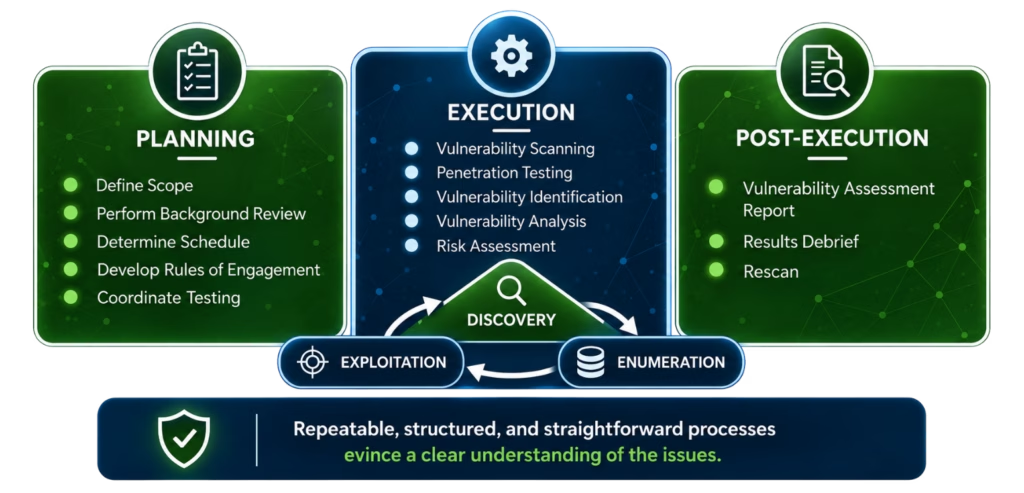
A repeatable methodology helps organizations understand what was tested, how findings were validated, and what actions should follow.
3. Experienced Professionals Who Can Think Like Attackers
Automated scanning tools can identify potential vulnerabilities, but experienced penetration testers provide the judgment needed to investigate how those weaknesses might be exploited.
A skilled tester can examine relationships between systems, evaluate configurations, and identify opportunities an attacker could use to gain unauthorized access or move through an environment.
When evaluating providers, organizations should ask about the team’s technical experience, relevant certifications, and familiarity with the systems being tested.
Carson & SAINT’s penetration testing professionals hold industry certifications across security assessment, penetration testing, incident handling, and related disciplines.
The objective is to work with professionals who can translate technical discoveries into meaningful security insights.
4. Assessment Capabilities That Match Your Environment
Organizations have different attack surfaces, and their penetration testing needs should reflect those differences.
Depending on the environment and objectives, an engagement may involve internal or external infrastructure, web and mobile applications, wireless networks, or social engineering.
For example, application testing can uncover weaknesses in systems that process sensitive information, while wireless assessments evaluate configurations and vulnerabilities that could affect protected data.
Organizations with specialized connected technologies may have additional considerations. Medical device penetration testing, for instance, can require careful scoping around device functionality, operational constraints, and the potential consequences of disrupting clinical systems.
Providers should also be able to explain when red-team, blue-team, or purple-team approaches are appropriate. These approaches support different objectives, from simulating attacker behavior to evaluating detection and response capabilities.
The right engagement should reflect the organization’s actual exposure rather than apply the same testing package to every environment.
5. Reporting That Helps You Prioritize Remediation
A penetration testing report should help security teams decide what to do next.
Finding vulnerabilities is important, but organizations also need to understand their potential consequences.
Useful reporting should explain how vulnerabilities were identified, what an attacker could accomplish by exploiting them, which assets could be affected, and what remediation steps are recommended.
This context is particularly valuable when security teams face competing priorities and limited resources.
A vulnerability affecting a critical business application may deserve greater attention than a similar weakness in a less consequential system.
Carson & SAINT emphasizes actionable findings that help organizations focus resources on exposures with the greatest potential impact. That approach supports broader cyber risk management efforts by connecting technical weaknesses to business decisions.
6. Support Beyond the Final Report
Penetration testing should provide a clear path from identifying vulnerabilities to addressing them.
Before selecting a provider, organizations should understand what happens after testing concludes.
Will the provider explain the findings to technical stakeholders? Can the team clarify remediation recommendations? Is rescanning available to validate corrective actions?
These considerations matter because even a detailed report has limited value if the organization cannot translate its findings into improvements.
Carson & SAINT’s post-execution process includes vulnerability assessment reporting, results debriefs, and rescanning. These activities help security teams understand identified exposures and evaluate whether remediation efforts have addressed them.
7. A Testing Schedule That Keeps Pace With Change
A penetration test provides insight into an environment at a particular point in time. As systems and applications change, new weaknesses may emerge.
Carson & SAINT recommends conducting internal and external penetration testing at least annually or when significant changes occur.
Organizations should also consider their regulatory obligations, business risk, and the pace of infrastructure changes when determining how frequently to test.
Major application deployments, network changes, and new externally accessible systems can all create reasons to reassess security.
A consistent testing schedule helps organizations evaluate their defenses as their environments evolve.
Choose Penetration Testing That Delivers Actionable Insight
The right penetration testing services should give organizations a clearer understanding of how attackers could compromise their environments and where security improvements will have the greatest impact.
That requires appropriate scope, experienced testers, established methodologies, and reporting that supports practical remediation.
Carson & SAINT combines these elements to help organizations identify exploitable weaknesses, assess their potential business impact, and make informed decisions about strengthening defenses.
Learn more about Carson & SAINT’s penetration testing services and how a structured assessment can support your organization’s security objectives.



0 Comments