









Most vulnerability management platforms can find vulnerabilities.
That is no longer the challenge.
Today’s security teams are responsible for managing growing attack surfaces, supporting compliance initiatives, reporting on risk, and coordinating remediation across multiple departments. The real question is not whether a platform can identify vulnerabilities. It’s whether it helps teams act on them efficiently.
As organizations evaluate vulnerability management solutions, customer experience data suggests that three capabilities consistently rise to the top: business value, ease of administration, and ease of integration.
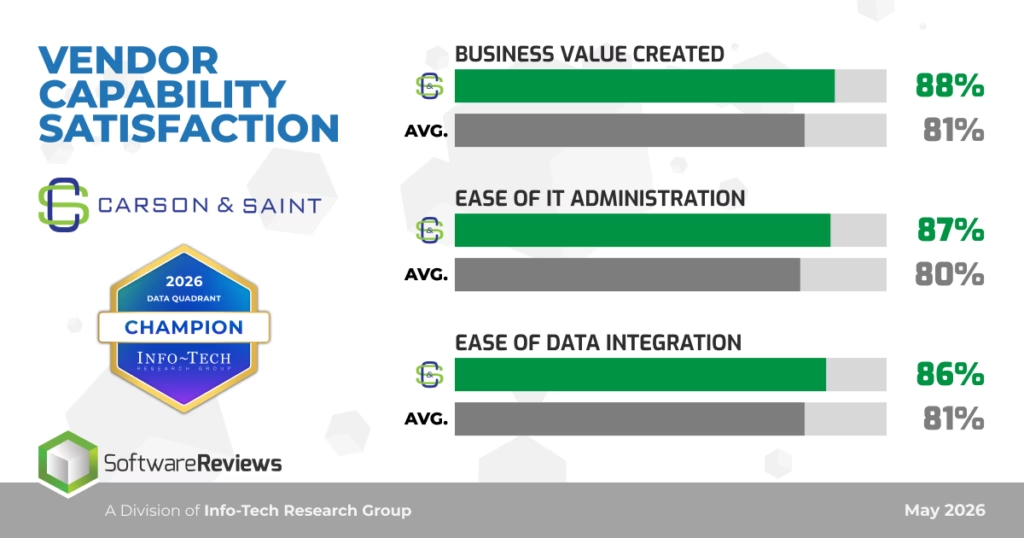
According to the 2026 SoftwareReviews Vulnerability Management Data Quadrant, customers rated SAINT Security Suite highly in all three categories:
These metrics tell a broader story about what security teams need from a modern vulnerability management platform.
Business Value Matters More Than Ever
Security leaders face increasing pressure to demonstrate measurable outcomes from cybersecurity investments.
Finding vulnerabilities is important, but leadership ultimately wants answers to bigger questions:
- Are we reducing risk?
- Are we improving our security posture?
- Are we making better decisions?
SoftwareReviews respondents rated SAINT Security Suite at 88% for Business Value Created, reflecting the platform’s ability to help organizations move beyond vulnerability discovery and toward meaningful risk reduction.
When vulnerability management supports better prioritization, faster remediation, and clearer reporting, it becomes a business enabler rather than simply another security tool.
This is the same philosophy behind Carson & SAINT’s broader approach to Cyber Risk Management, where security activities are aligned to business outcomes and decision-making.
Security Teams Cannot Afford Administrative Overhead
Every hour spent managing a platform is an hour not spent reducing risk.
Most security teams already juggle vulnerability management, endpoint protection, identity security, compliance obligations, cloud environments, and countless other responsibilities. Adding unnecessary complexity only increases operational strain.
SoftwareReviews customers rated SAINT Security Suite at 87% for Ease of IT Administration, recognizing the importance of a platform that helps teams work efficiently rather than creating additional workload.
A vulnerability management platform should simplify operations, not become another system that requires constant attention.
The easier a platform is to administer, the more time teams can spend on what matters most: identifying, prioritizing, and addressing risk.
Vulnerability Data Must Connect to the Business
One of the biggest challenges in cybersecurity is not generating data. It’s connecting that data to action.
Vulnerability findings often need to flow into ticketing systems, compliance reporting, asset inventories, risk management processes, and remediation workflows. When systems do not integrate effectively, valuable information becomes siloed.
SoftwareReviews respondents rated SAINT Security Suite at 86% for Ease of Data Integration, highlighting the importance of connected security operations.
Integration is not simply a technical convenience. It helps organizations create more efficient workflows, improve collaboration across teams, and gain greater visibility into risk.
This becomes even more valuable when vulnerability data is tied to broader Vulnerability Risk Management efforts that help organizations prioritize remediation based on business impact.
What Security Leaders Should Look For
When evaluating a vulnerability management platform, it is easy to focus on scanning capabilities and feature lists.
The SoftwareReviews data suggests customers are looking beyond those basics.
They want solutions that:
- Create measurable business value
- Reduce operational complexity
- Integrate with existing workflows
- Support faster and more informed decision-making
Those priorities reflect a broader shift in how organizations view vulnerability management.
The goal is no longer simply to identify vulnerabilities. The goal is to manage risk more effectively.
A vulnerability management platform should help security teams move from finding problems to solving them.
To learn more about how SAINT helps organizations prioritize risk, streamline operations, and strengthen vulnerability management programs, visit our full SofwareReviews report here, or contact Carson & SAINT to schedule a demonstration.



0 Comments