



When organizations evaluate a vulnerability management platform, the conversation usually starts with technology. What can the platform scan? How does it prioritize vulnerabilities? How well does it integrate with the existing security stack?
Those questions matter. But there is another one security leaders should ask: What happens when we need help?
Vulnerability management is rarely a set-it-and-forget-it function. Critical vulnerabilities emerge. Scan results need interpretation. Compliance deadlines create pressure. Environments change. When those situations arise, the quality of vendor support can become just as important as the technology itself.
Poor Support Creates More Than Frustration
Security teams already have limited time and resources. When they encounter a problem with a vulnerability management platform, waiting for answers can create operational consequences.
A delayed response can mean analysts spend more time troubleshooting and less time remediating vulnerabilities. Questions about findings can slow decision-making. And when compliance deadlines are approaching, even a relatively small issue can quickly become urgent.
In other words, vendor support is not simply about customer service. It can affect how efficiently a security team manages risk.
That is especially important when security teams are already being asked to accomplish more with limited time and resources. As vulnerability management evolves beyond simply discovering vulnerabilities, organizations increasingly need to determine which exposures matter most, what to remediate first, and how to communicate those decisions across security, IT, compliance, and leadership teams.
What Customers Say About Vulnerability Management Support
Customer feedback offers one way to understand how vendors perform after implementation.
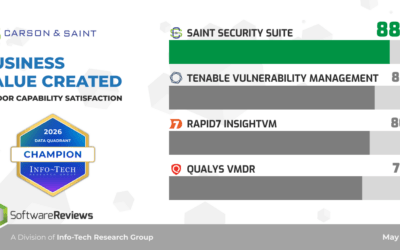
According to the 2026 SoftwareReviews Vulnerability Management Data Quadrant, SAINT Security Suite received a 91% Vendor Support satisfaction score, compared with 82% for Rapid7 InsightVM, 80% for Qualys VMDR, and 79% for Tenable Vulnerability Management.
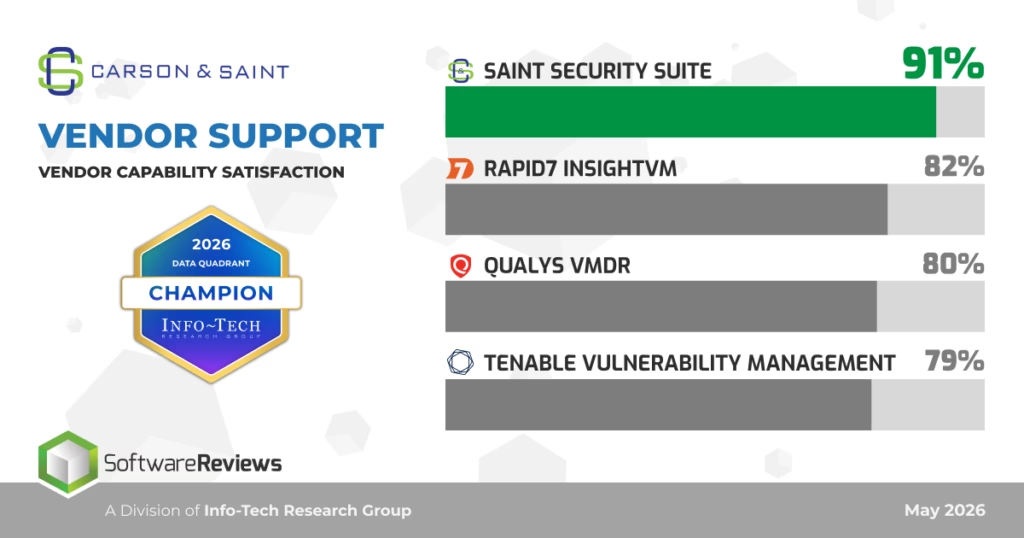
The takeaway is bigger than the ranking itself. Independent SAINT Security Suite customer reviews demonstrate why organizations evaluating vulnerability management platforms should consider the people behind the technology alongside the technology’s capabilities.
Your Vendor Should Be a Partner
When a critical issue appears, you do not want to spend valuable time navigating layers of support simply to get an answer. You want access to people who understand the platform, the vulnerability management process, and the security challenge you are trying to solve.
That philosophy is central to Carson & SAINT’s approach. We believe customers should be treated as partners, not numbers. Technology should give security teams greater confidence, not introduce more questions about whether they can rely on their security platform.
When evaluating a vulnerability management provider, consider how quickly your team can reach knowledgeable support. What happens when an issue requires escalation? Can the vendor help you understand security and compliance challenges rather than simply troubleshoot its software?
The answers can tell you a great deal about what the relationship will look like after the contract is signed.
Technology Matters. So Do the People Behind It.
The right vulnerability management platform should help your organization find vulnerabilities, prioritize risk, and move remediation forward. But technology alone does not make a vulnerability management program successful.
When the situation becomes complicated or urgent, having knowledgeable people in your corner matters.
That is why vendor support deserves a place alongside scanning capabilities, risk prioritization, integrations, and reporting when evaluating vulnerability management solutions.
Learn more about how SAINT Risk Navigator supports vulnerability risk management or contact Carson & SAINT to discuss your organization’s vulnerability management needs.

0 Comments